
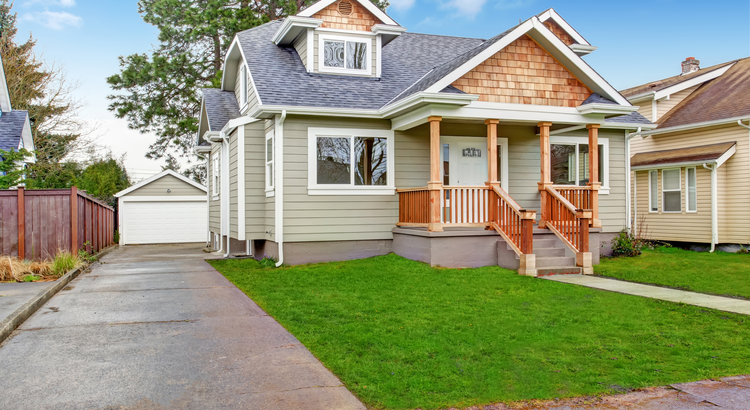
Most people think new homes cost more than existing ones. But right now, that’s actually backwards.
Nationally, at least. Here in New Jersey the picture is nearly the opposite, and the gap between those two facts is worth understanding before you rule new construction in or out.
Why new homes got cheaper nationally
For decades, new homes carried a clear price premium. That premium is gone.
In the first quarter of 2026, the median price of a new single-family home was $403,200 — about $1,400 less than the median existing home at $404,600. That’s the fourth consecutive quarter existing prices have topped new ones, a reversal that began in mid-2024. By July, the median new-home sale price had fallen to $393,800, the lowest since July 2021, while the median existing home sold for $434,100. (Figures come from the U.S. Census Bureau’s new residential sales data.)
Two forces are driving it. Builders are responding to soft demand by building smaller homes on smaller lots and offering aggressive incentives rather than letting inventory sit. Meanwhile existing-home supply stays tight because owners with sub-4% mortgages won’t sell, which props up resale prices.
Why that flip doesn’t reach New Jersey
Here’s the part the national coverage leaves out, and it matters a great deal here.
Regional medians for new homes in Q1 2026 looked like this:
| Region | Median new home |
|---|---|
| Northeast | $815,600 |
| West | $551,500 |
| Midwest | $375,900 |
| South | $361,800 |
New homes in the Northeast run roughly double the national median and more than twice the South. The reason is the same one behind most of what’s unusual about this market: land. Builders in Texas and the Carolinas put up large communities on cheap acreage at the edge of metros. There is no equivalent land here. What gets built in Monmouth and Ocean tends to be infill, teardown-and-rebuild, or small subdivisions — and all three are expensive per unit.
So the national story is that builders cut prices to move volume. Our story is that there isn’t much volume to move. It’s the same regional split we found when we looked at where sellers are actually cutting prices — the Northeast keeps behaving differently from the national average.
What this means if you’re shopping new homes here
Don’t expect new construction to be the budget option. If you’ve read that new homes now cost less and you’re shopping the Shore, you’re likely to be disappointed by the first few listings you pull up. The national median simply doesn’t describe what’s being built in this area.
But do compare on a per-square-foot and per-year basis. This is where new homes can still win. A new build comes with a builder warranty, current-code systems, better insulation, and no deferred maintenance. An older Shore home may need a roof, a heating system, and updated electrical within a few years of closing. The sticker prices aren’t comparing the same thing.
Take builder incentives seriously — and read them carefully. Mortgage rate buydowns, closing cost credits, and included upgrades can be worth real money, sometimes more than an equivalent price reduction. Two cautions: incentives are often tied to using the builder’s in-house lender, so compare the total loan terms rather than the headline rate, and the advertised incentive is rarely the whole package. Ask what’s negotiable.
Watch standing inventory. Nationally there were 485,000 new homes for sale in June, about a 9.3-month supply, against 4.6 months for existing homes. Builders sitting on completed spec homes are far more flexible than builders selling from a plan. A finished house that’s been standing empty is where the negotiating room is.
The coastal considerations
Two things specific to building near the water that don’t come up in national coverage.
New homes in flood zones are built to current elevation requirements, which can mean meaningfully lower flood insurance premiums than a comparable older house. Over a thirty-year hold, that difference can be substantial — and it’s worth pricing before you compare purchase prices.
The other side: new communities here are often built on the less-established edges of towns. That’s the tradeoff for the price. An older home in a walkable part of Spring Lake and a new build a few miles inland are different products, whatever the comparable square footage says.
The bottom line
The national headline is real — the price premium on new homes has vanished across the country. But averages hide regions, and the Northeast is the most expensive place in America to buy new construction.
That doesn’t mean new construction is wrong for you. It means the decision here has to be made on the actual numbers for actual properties rather than on a national statistic. Compare a specific new build against a specific resale, price out the incentive package, factor the maintenance you’d avoid and the flood insurance you’d pay, and see which one wins.
Often it’s closer than people assume — just not for the reason the headlines suggest. And if the broader market has you uneasy, it’s worth reading why the crash headlines don’t hold up against the data.
Figures cited reflect national and regional data from the U.S. Census Bureau, the National Association of Realtors, and NAHB for 2026; regional medians reflect different mixes of home size and location and are not direct like-for-like comparisons. Local conditions vary considerably by town. For a comparison specific to properties you’re considering, ask for a current market analysis.

Providing guidance and assisting motivated buyers, sellers, tenants, landlords, and investors in marketing and purchasing property for the right price under the best terms. Determining clients’ needs and financial ability to purchase the best home for them. Call me today and let me help you find a home that can change your life!